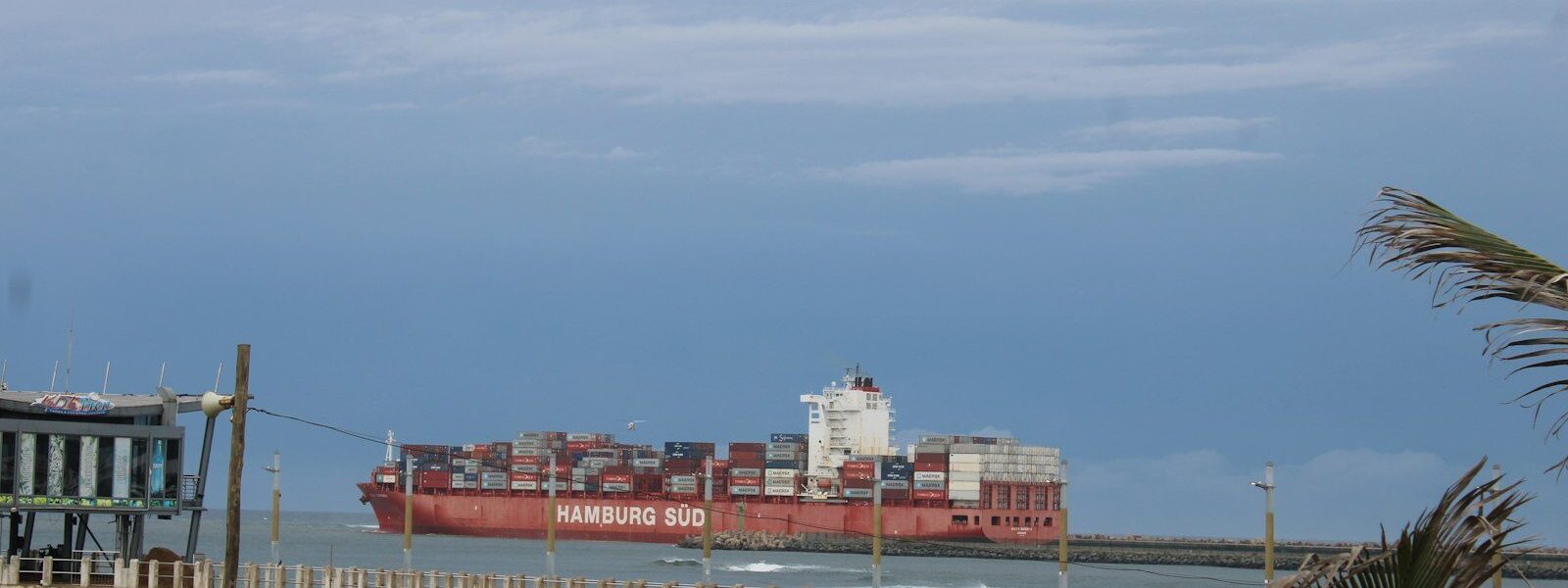
To import from China for business, first register free with SARS for a customs (importer) code through its RLA system. Then check the duty rate and whether ITAC or other permits apply to your products. When goods arrive, a clearing agent files the declaration, and you pay duty plus 15% import VAT before release. As of October 2026, sea freight from Shanghai, Ningbo or Shenzhen to Durban takes roughly 22–35 days. The personal customs code 70707070 is capped at R150,000 a year and cannot be used for goods you resell.

The process at a glance
- Register a customs code: apply on SARS eFiling through RLA (Registration, Licensing and Accreditation). It is free.
- Check tariff and permits: find the HS code, the duty rate, any anti-dumping duty, and whether an import permit is required.
- Book freight: choose a full container, groupage (LCL) or air. Your forwarder in China handles export clearance.
- Clear customs on arrival: a licensed South African clearing agent files the electronic declaration with the commercial invoice, packing list and bill of lading.
- Pay and collect: pay duty and import VAT. Once customs releases the goods, arrange inland transport.
Step 1: register a customs code
Companies and individuals importing commercially need a customs code. To apply online, log in to eFiling, link the organisation profile to your individual profile, assign RLA rights, then complete and submit the application and track it in your eFiling inbox. You need proof of address (a municipal, phone or similar account) and proof of contact details. If these are not in the applicant’s name, add an affidavit. SARS may also require security. Foreign entities cannot register directly on eFiling and must go to a Customs branch office. It is best to set up a South African company first. See registering a company.
Step 2: how duty and import VAT are calculated
South Africa has no free trade agreement with China, so Chinese goods pay the general (MFN) rate. Rates range from 0% to 45%: most raw materials and machinery are low, while clothing, footwear and some consumer goods are high. Some Chinese steel, tyres, textiles and other goods may also face anti-dumping duties. Always check the exact rate in the SARS Tariff Book.
Import VAT is charged on the “added tax value” (ATV):
| Item | Calculation | Example |
|---|---|---|
| Customs value | Based on free-on-board (FOB) value | R10,000 |
| Customs duty | Customs value × rate (20% assumed) | R2,000 |
| Added tax value (ATV) | Customs value + duty + 10% of customs value | R13,000 |
| Import VAT | ATV × 15% | R1,950 |
VAT-registered businesses can usually claim import VAT as input tax, using the customs release documents. See our VAT guide.
Step 3: goods that need permits
- ITAC import permits: required for all used or second-hand goods (including used vehicles and machinery) and for controlled goods such as new tyres, certain chemicals, fuels, arms and ammunition, and gambling devices. ITAC (the International Trade Administration Commission) charges no service fee and usually issues permits in 3–5 working days.
- Other regulators: electrical and electronic products may need approval from the NRCS (National Regulator for Compulsory Specifications), radio equipment needs ICASA type approval, and food, plant and animal products need agricultural permits.
- Intellectual property: customs seizes counterfeit branded goods, and importers can face criminal charges.
Confirm permits before you ship. Sorting them out after arrival often means heavy port storage charges.
Logistics: ports and transit times
| Route | Mode | Approximate time (as of October 2026) |
|---|---|---|
| Shanghai / Ningbo / Shenzhen → Durban | Sea | About 22–35 days; weekly sailings |
| Shanghai / Ningbo / Shenzhen → Cape Town | Sea | About 22–35 days, depending on the service and transhipment |
| Shanghai Pudong / Beijing → Johannesburg | Air | About 2–5 days door to door |
Durban is South Africa’s largest container port, and most cargo for Johannesburg is landed there and trucked inland. Port congestion, weather and transhipment can add time, so build buffer stock. See our Durban city guide.
E-commerce parcels and personal imports
- Since 1 September 2024: online parcels under R500, which used to pay only a flat 20% duty and no VAT, now pay 15% VAT on top of the 20% duty.
- Since 20 November 2025: individuals importing under customs code 70707070 are limited to R150,000 in total declared value per calendar year. Once you pass the limit, declarations are rejected automatically and you must apply for a formal customs code.
- Code 70707070 is for personal use only and cannot be used for goods you resell. Stock for an online shop must come in under your business’s customs code.
Paying suppliers and common mistakes
Payments to Chinese suppliers must go through an authorised dealer bank under exchange control rules. Keep invoices and customs documents for inspection. See sending money between South Africa and China. Common mistakes:
- Under-declaring value: customs can revalue the goods, raise extra duty and penalties, or detain the shipment.
- Using someone else’s customs code: liability becomes unclear and it damages your own compliance record.
- Vague descriptions: entries such as “parts” or “samples” attract inspections.
More in our Business section.
FAQ
How much does a customs code cost and how long does it take?
SARS charges no registration fee. Processing time depends on how complete your documents are and whether SARS asks for more, so apply before your first shipment leaves China.
Do I need a code to export from South Africa to China?
Yes. Exporters also register with SARS, and some goods need export permits.
Can I clear goods myself?
Legally you can, but most businesses use a licensed clearing agent who knows tariff classification and electronic filing, which cuts errors.
Do samples pay duty?
Usually, yes. Unless a specific exemption or rebate applies, commercial samples must be declared and taxed.
Sources
- SARS: Registration, Licensing and Accreditation
- SARS: How is VAT calculated on imported goods?
- SARS: Duties and taxes for importers
- SARS: Notice to importers declaring goods under customs code 70707070
- SARS FAQ: Do I need to register as an importer for personal goods?
- ITAC: Import control
- gov.za: Register as importer
- DP World: Shipping from China to South Africa
- VATCalc: SARS scraps import VAT exemption on consignments below R500