The first things most newcomers sort out are a SIM card, then utilities, shopping and a monthly budget. Daily life in South Africa runs a little differently from China, and knowing the basics in advance saves a lot of trouble. This section collects the practical questions newcomers ask most in their first few weeks.
Start here
- SIM cards and RICA registration: networks, documents you need and data bundles.
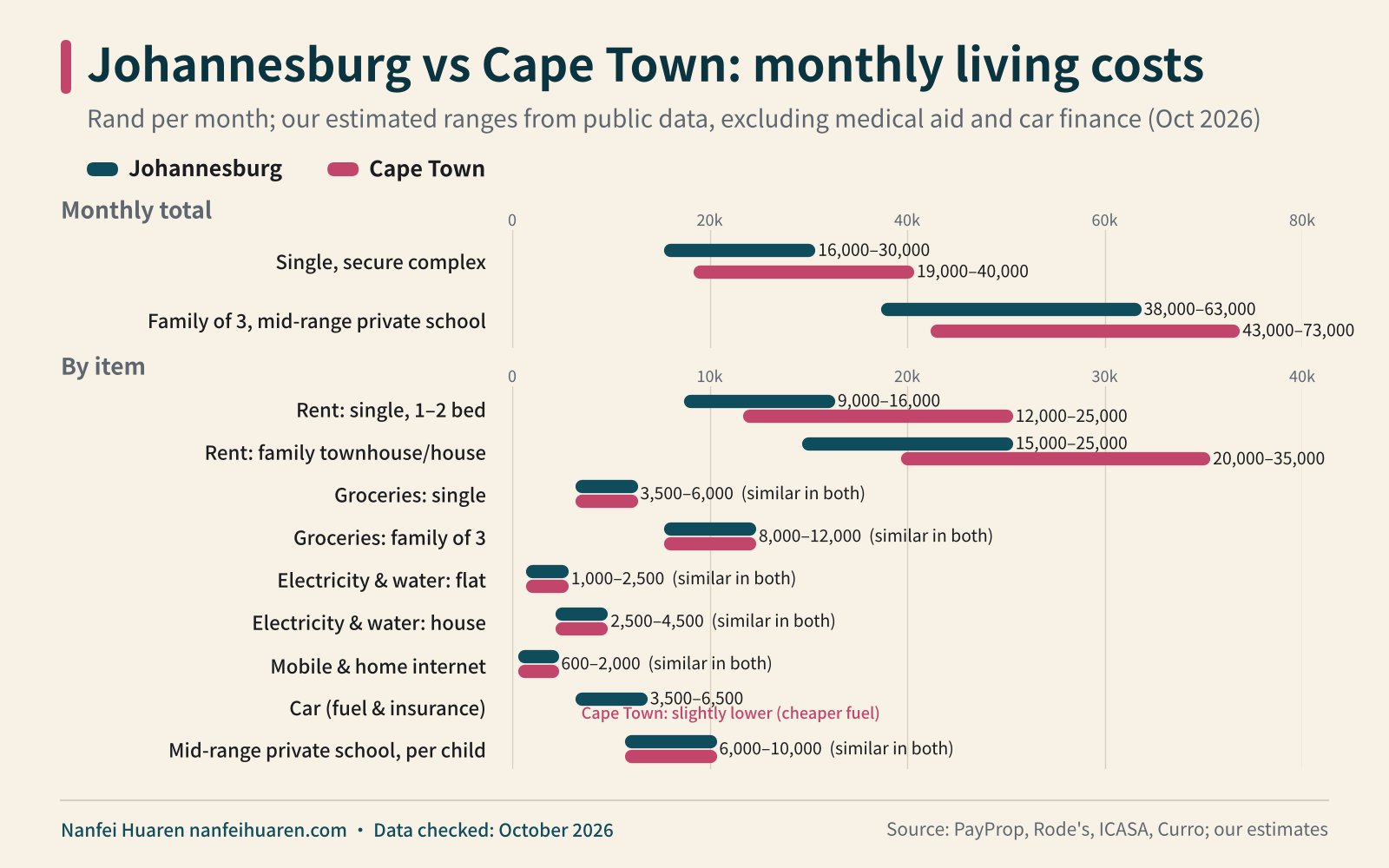
- Cost of living: monthly costs for rent, food, transport and school in Johannesburg and Cape Town.
- Load shedding and water cuts: backup power, water storage and checking outage schedules for homes and shops.
Key things to know
- Six hours behind Beijing. South Africa is on UTC+2, six hours behind Beijing time, with no daylight saving, so plan calls and meetings with China accordingly.
- Different plugs. Mains power is 230V and the common plug types are M, N and C, so Chinese appliances need adapters.
- SIM cards must be registered. Under RICA, you register an identity document and proof of address when you get a SIM; foreigners normally use their passport.
- Plan for outages. National load shedding has been much less frequent over the past two years, but local power and water cuts still happen, so keep backup power and stored water at home and at work.
- Money and payments. The currency is the rand (R). Cards are accepted almost everywhere in shops and malls, and some Chinese-owned businesses also take WeChat Pay or Alipay.
Related sections
For Chinese groceries and community events, see Chinese community. For utilities in your lease, see Housing & property.