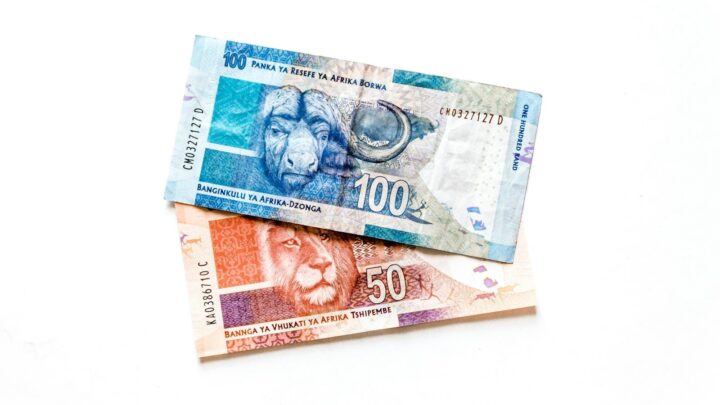
South Africa uses the rand (ZAR, written R), and card payments and banking apps are everywhere. Opening a local bank account is usually one of the first jobs after arriving, and sending money home to China means following both South African exchange control and China’s foreign exchange rules.
Start here
- Opening a bank account as a foreigner: documents, how the big banks compare and common reasons for rejection.
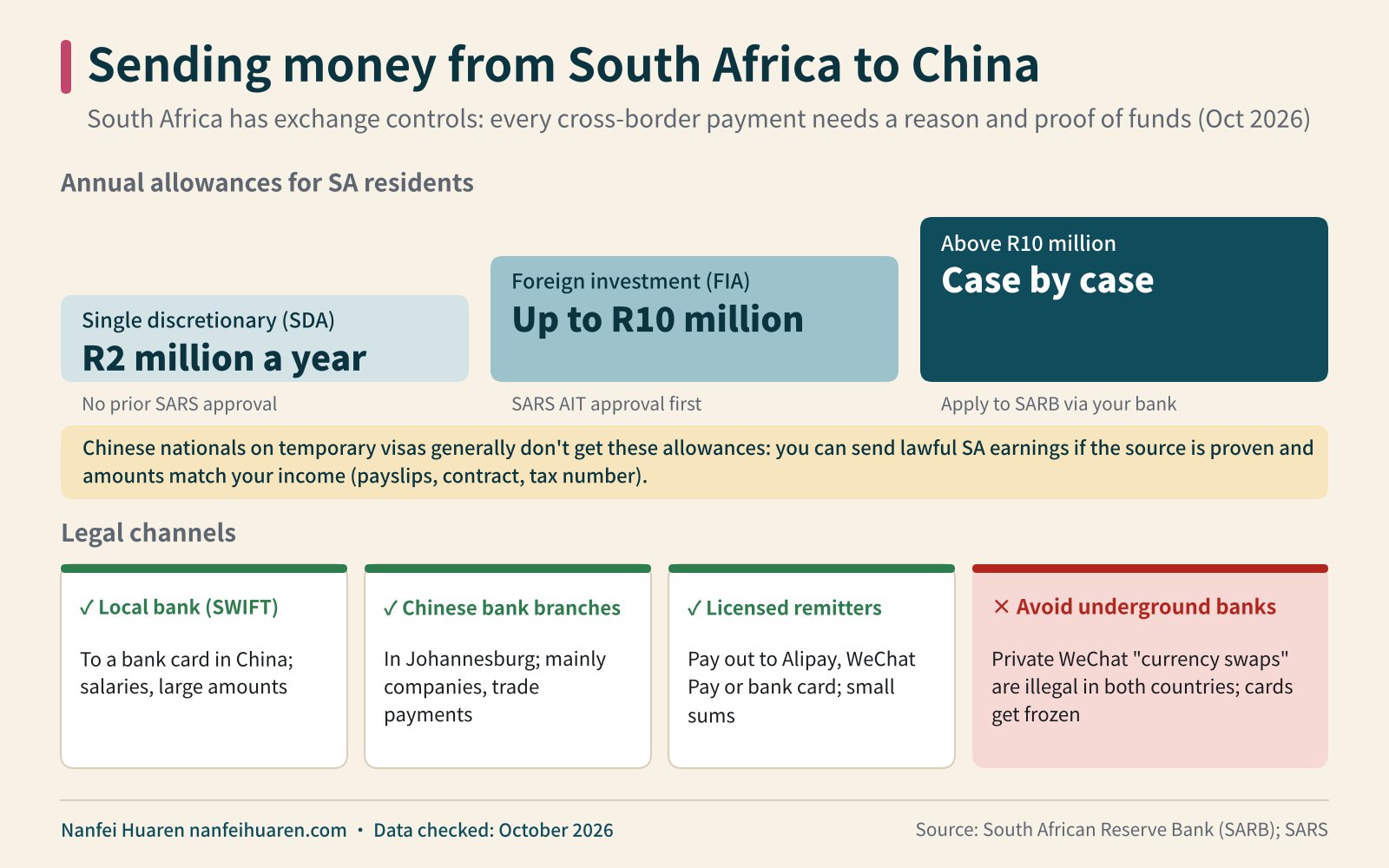
- Sending money between South Africa and China: exchange control, legal channels, costs and timing.
Key things to know
- Banks run FICA checks. Expect to show your passport, a valid visa and proof of address; missing proof of address is the most common hurdle for foreigners.
- Use regulated channels. Money leaving or entering South Africa should go through a bank or a licensed authorised dealer. Informal money changers break exchange control rules and leave you unprotected.
- The personal offshore allowance has doubled. In April 2026 the Reserve Bank raised the single discretionary allowance (SDA) for resident individuals aged 18+ from R1 million to R2 million a year (as of October 2026).
- Higher cash limits. The same circulars raised the amount of rand banknotes a person may carry into or out of the country from R25,000 to R100,000.
- China has limits too. Chinese residents have a standard annual foreign exchange purchase quota of USD 50,000 equivalent, so plan larger transfers in advance.
Money and gambling
Licensed sports betting and land-based casinos are legal in South Africa, but online casino games (slots, roulette, live dealer and so on) are illegal. Paying money to offshore gambling sites breaks the law and is very hard to recover if something goes wrong. See Betting & casinos for what is and is not allowed.
Related sections
For business accounts and tax, see Business & investment and Tax & accounting.